
How to compare car equipment across different listings
Look beyond trim names and build a checklist of the features you will actually use.
The worked examples are fictional. Use the worksheets with your own listings and quotations; example amounts are not market prices.
On this page
Compare Functions Rather Than the Number of Extras
When evaluating car equipment, it’s crucial to focus on the functionality of features rather than simply counting the number of extras. This approach ensures that you prioritize what you actually need and use in your daily driving experience. Begin by identifying essential features that will enhance your driving comfort and safety. For instance, if you frequently drive in urban areas, parking assistance technologies might be more beneficial than a high-end sound system.
Essential Features Gate
Start by listing the functions you personally require and the reason each matters. Separate an essential from a preference: heated seats may be important to one buyer and optional to another. If you want a driver-assistance function, specify what you expect it to do, then check the actual vehicle’s documentation and limitations. A feature name is not a safety guarantee or a substitute for the driver’s attention.
Record these essential features in a checklist to ensure they are present when comparing different vehicles. This will help you filter out options that don’t meet your basic requirements, allowing you to focus on cars that truly fit your needs.
Preferences After Essentials
Once you have established your essential features, consider additional preferences that would enhance your driving experience. These are features that are nice to have but not critical. For example, a panoramic sunroof or a premium audio system might fall into this category. Prioritize these preferences based on how much they will improve your enjoyment of the vehicle.
Document these preferences separately from your essential features. This will help you weigh the trade-offs between different models and packages, ensuring you choose a car that offers the best balance of essentials and preferences.
Split Ambiguous Bundles
Car manufacturers often bundle features together, which can make it challenging to understand what you’re actually getting. It’s important to break down these bundles and evaluate each feature individually.
Parking Sensors, Rear Camera, 360 View, Automated Parking
Parking assistance features can vary significantly in functionality. Parking sensors (Park Distance Control) provide audible alerts when approaching obstacles, while a rear camera (Rear View Camera) offers visual guidance. A 360-degree view (Surround View) provides a bird’s-eye perspective, and automated parking (Park Assist) can handle the steering for you.
Ask for a demonstration of these features to understand their operation and effectiveness. Record which features are included in each vehicle you’re considering, and note any differences in their functionality.
Cruise Control vs. Adaptive Cruise Control
Do not treat “cruise control” and “adaptive cruise control” as interchangeable descriptions. Ask what functions the exact vehicle supports, under which operating conditions, and what the driver must still do. In particular, do not infer stopping, restarting or other capabilities from an abbreviation. Refer to the vehicle’s own documentation and ask the seller to clarify the advertised function.
Heated Seats vs. Heated Steering Wheel
Heated seats (Sitzheizung) and a heated steering wheel (Lenkradheizung) both provide comfort in cold weather, but they serve different purposes. Decide which is more important based on your climate and personal comfort preferences. If possible, test these features to assess their effectiveness.
Phone Connection: Wired vs. Wireless Compatibility
Separate Bluetooth calling or audio from phone-projection features such as Apple CarPlay or Android Auto. If the listing names a projection feature, ask whether that particular car supports it through a cable, wirelessly or under other conditions. Test the function you need with your own compatible phone and the seller’s permission; one connection working does not establish that all the others are included.
Towbar Installed vs. Preparation
A towbar (Anhängerkupplung) can be installed or the vehicle may come with preparation for one. If towing is important, confirm whether the towbar is already installed or if additional installation is required. This can affect both convenience and cost.
Supplied Charging Cable vs. Car Capability
For electric vehicles, check whether a charging cable is supplied (Ladekabel) and what the car’s charging capabilities are. Some vehicles may support fast charging, while others do not. Verify these details to ensure the vehicle meets your charging needs.
Keep Original Feature Wording Alongside Translation
When comparing features, it’s important to keep the original wording alongside any translations. This helps avoid confusion, especially with abbreviations that may not have direct equivalents. For example, “ACC” might be used for adaptive cruise control, but the exact functionality can differ between manufacturers.
Always ask for a demonstration of features to see them in action. This will help you understand their practical benefits and limitations, ensuring you make an informed decision based on real-world use rather than just specifications.
Build an Evidence Matrix
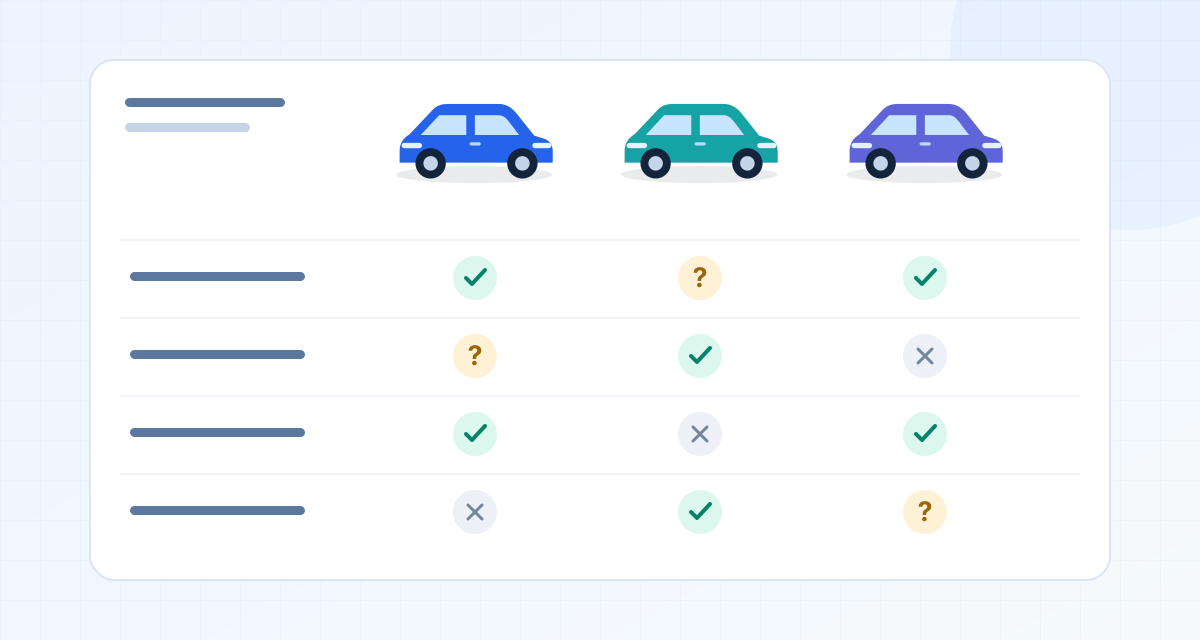
When comparing car equipment across different vehicles, it’s crucial to organize the information systematically. An evidence matrix helps you evaluate claims and identify gaps in information. Let’s consider three fictional vehicles, A, B, and C, to illustrate how to build this matrix.
Example Vehicles and Equipment Claims
- Vehicle A: Advertises a rear camera, heated seats are unknown, phone connection is claimed but unspecified, and towbar preparation is noted.
- Vehicle B: Seller confirms a rear camera is installed but operation is untested, heated seats are claimed, phone connection is claimed to be wired, and towbar status is unknown.
- Vehicle C: Explicitly stated to be without a rear camera, heated seats are claimed, phone connection status is unknown, and a towbar is claimed to be installed.
Creating the Matrix
To effectively compare these vehicles, use a table to summarize the equipment claims:
| Feature | Vehicle A | Vehicle B | Vehicle C |
|---|---|---|---|
| Rear Camera | Claimed | Confirmed, Untested | Absent |
| Heated Seats | Unknown | Claimed | Claimed |
| Phone Connection | Claimed, Unspecified | Claimed, Wired | Unknown |
| Towbar | Preparation Only | Unknown | Claimed |
This matrix provides a clear overview of what each vehicle offers based on the available information. It highlights where further verification is needed, especially for features that are essential to you.
Interpreting the Matrix
- Rear Camera: Since a rear camera is essential for the buyer, Vehicle C is immediately disqualified as it lacks this feature. Vehicles A and B require further verification to ensure the rear camera is functional.
- Heated Seats: Both Vehicles B and C claim to have heated seats, but without confirmation, this remains uncertain. Vehicle A’s status is unknown, necessitating further inquiry.
- Phone Connection: Vehicle B’s claim of a wired connection is more specific than Vehicle A’s unspecified claim. Vehicle C’s status is unknown, requiring additional investigation.
- Towbar: Vehicle C claims to have a towbar installed, which may be a deciding factor if this feature is important. Vehicle A only has preparation, and Vehicle B’s status is unknown.
Evidence Ladder
To verify the claims in the matrix, use an evidence ladder. This approach involves gathering information from various sources, each addressing different aspects of the vehicle’s features.
Steps on the Evidence Ladder
-
Ad Claim: Start with the advertisement. It provides initial claims but should not be taken at face value. Record the date and vehicle identity to ensure the ad matches the specific vehicle.
-
Photo Evidence: Look for photos that support the claims. For example, a picture of the dashboard might show the rear camera interface. However, photos can be misleading or outdated, so they are not definitive proof.
-
Exact Vehicle Specification: Obtain the vehicle’s specification sheet from the manufacturer or dealer. This document lists the features included when the vehicle was built, offering a more reliable source than the ad.
-
Written Clarification: Request written confirmation from the seller or dealer regarding the features. This step helps clarify any ambiguous claims, such as the type of phone connection or the presence of heated seats.
-
Operation Check: Finally, test the features yourself or have them tested by a professional. This step is crucial for features like the rear camera, where functionality is as important as presence.
Applying the Ladder
For Vehicles A and B, the rear camera’s functionality must be confirmed through an operation check. For heated seats and phone connections, written clarification and operation checks are advisable. Vehicle C’s towbar claim should be visually inspected and tested if possible.
By following the evidence ladder, you can systematically verify each feature’s presence and functionality, ensuring that the vehicle meets your requirements. This method reduces the risk of relying solely on seller claims or advertisements, providing a more comprehensive understanding of what each vehicle offers.
Ask a Seller One Precise Feature Question
When inquiring about a vehicle’s features, it’s crucial to ask the seller a precise question regarding a specific function mentioned in the advertisement. This ensures clarity and helps avoid misunderstandings. For example, if the ad states that the car includes a rearview camera, you could ask: “Could you confirm if the rearview camera is operational and demonstrate how it works?” This direct approach helps verify the feature’s presence and functionality.
For features related to phone compatibility, such as Bluetooth or Apple CarPlay, consider sending a copyable message like: “The ad mentions Bluetooth connectivity. Could you confirm if it supports hands-free calling and music streaming, and demonstrate these functions?” This request not only seeks confirmation but also a demonstration, which is crucial for understanding the feature’s practical use.
New Order and Stock
When purchasing a new car, it’s important to tie any included options to the actual quote or configuration rather than relying on a generic model page. This ensures that the features you expect are indeed part of the specific vehicle you are considering. For instance, if a sunroof is a must-have, ensure it’s listed in the official quote or configuration document provided by the dealer.
For used cars, the presence of a feature does not guarantee its functionality. If a used car is advertised with a navigation system, ask the seller to demonstrate its operation. You might say, “The listing mentions a built-in navigation system. Could you show me how it works and confirm that the maps are up to date?” This helps verify that the feature is not only present but also functional and current.
Check Time-Limited or Paid Features
Some car features may require activation or a subscription, which can affect their availability and cost. If the seller mentions such features, ask about the included term, provider, and renewal conditions. For example, if the car comes with a satellite radio subscription, inquire: “The ad states the car includes satellite radio. Could you tell me how long the subscription lasts, who the provider is, and what the renewal conditions are?”
Avoid making assumptions about specific brands or models, as these details can vary significantly. Always seek confirmation from the seller to ensure you understand what is included and what additional costs might be involved after the initial term.
Viewing Checklist
When viewing a car, start with the essentials. Check the exterior and interior condition, ensuring there are no obvious signs of damage or excessive wear. Next, verify the operation of key features with the seller. For instance, test the air conditioning, lights, and any electronic features like the infotainment system.
If you have permission, use your own phone to test connectivity features such as Bluetooth or Apple CarPlay. This will give you firsthand experience of how these features work with your devices. However, avoid using unsafe road testing methods to check features; instead, rely on stationary demonstrations where possible.
If you encounter features or systems that are beyond your knowledge, consider seeking professional help. A mechanic or a car expert can provide insights into the vehicle’s condition and the functionality of its features, ensuring you make an informed decision.
Reusable Equipment Worksheet
When comparing car equipment, it’s essential to maintain a structured worksheet to track various details about each feature. This helps in making informed decisions and resolving discrepancies. Below is a suggested format for a reusable equipment worksheet, including a completed example for a rear camera case and blank fields for your use.
Worksheet Fields
- Requirement: Specify the equipment or feature you are tracking. For example, “Rear Camera.”
- Original Wording: Note the exact wording used in the advertisement or listing. This helps in identifying any discrepancies later.
- Source: Record where the information was obtained, such as a specific website or dealership.
- Date: Include the date when the information was gathered. This is crucial for tracking changes over time.
- Evidence Status: Indicate whether the feature has been verified, is pending verification, or is unknown.
- Next Check: Plan when you will next verify this information.
- Decision: Record your decision regarding the feature, such as “Accept,” “Reject,” or “Pending.”
Completed Example: Rear Camera Case
- Requirement: Rear Camera
- Original Wording: “Equipped with rear cam”
- Source: Dealer Website
- Date: 2023-10-01
- Evidence Status: Verified
- Next Check: 2023-11-01
- Decision: Accept
Blank Template for Reader
- Requirement:
- Original Wording:
- Source:
- Date:
- Evidence Status:
- Next Check:
- Decision:
Resolve Disagreements Between Ad, Photo, and Spec
When discrepancies arise between the advertisement, photos, and specifications, it’s important to handle them carefully. Here’s how to approach these situations:
- Preserve Both: Keep records of all conflicting information. This ensures you have a comprehensive view of the discrepancies.
- Ask Which Applies to the Exact Car: Contact the seller to clarify which information is accurate for the specific vehicle in question. This can often resolve simple misunderstandings.
- Mark as Unknown Until Clarified: If the seller cannot provide a clear answer, mark the feature as “unknown” in your worksheet. This prevents assumptions and ensures you remain objective.
Avoid assuming fraud or treating missing information as absent. Instead, focus on gathering as much verified information as possible.
Equipment Questions Answered
Is the Trim Level Enough to Establish Equipment?
No. Use the trim name as a starting point, then check the specification of the exact vehicle or order. Do not assume that a brochure for another year, market or configuration applies. List the functions you need and ask the seller to identify the evidence for each one.
How Can I Prove a Translated Term?
A translation can help explain the wording, but it cannot prove what is fitted. Keep the original term, describe the function you mean in plain language, and ask for confirmation tied to the specific car. Verify operation separately when it is practical to do so.
Should I Choose the Car with the Most Options?
An extras count treats essential and irrelevant equipment as equal. Start with your required functions, then compare preferences among cars that pass those checks. A car with fewer advertised options may fit your actual use better; missing descriptions also make raw counts unreliable.
Can AI Infer Features?
Ask AI to extract advertised features and highlight uncertainty, not fill gaps from patterns or trim names. Require a source quote for every claim. If the ad does not establish whether a feature is included, the useful answer is “unknown” followed by a seller question.
Choose Three Important Functions to Verify
When verifying car equipment, focus on three critical functions that are most important to you. These could include:
- Safety Features: Ensure that essential safety equipment is present and functional.
- Infotainment System: Verify the presence and functionality of the infotainment system, including navigation and connectivity options.
- Comfort Features: Check for comfort-related equipment such as climate control and seating adjustments.
For further guidance, refer to our guide on reading car listings and our questions for car sellers.
Garageview allows you to compare available details and add manual notes, but remember that it does not provide an automated verified equipment database. Always verify equipment manually to ensure accuracy.
Published by Garageview.ai, with AI-assisted drafting and translation. These guides explain our suggested buying workflow; they are not vehicle inspections or independent marketplace rankings.